









Traveling with your CPAP Machine can feel overwhelming, especially if you're thinking about airports security lines, foreign power outlets, and keeping your CPAP machine safe. It is completely normal to worry about how everything will go as you start to travel, but it doesn't have to be complicated.
With a little help and the right guidance, it becomes just another part of your daily routine, something you can manage so you can enjoy your travels. Here is a guide to make your travels feel lighter. These CPAP travel tips provide a roadmap with a list of CPAP supplies that truly make a difference on the road, allowing you to move through airports and hotels with confidence. Most importantly it will allow you to stay connected to your therapy keeping you feeling your best!
Know your rights: FAA & DOT Regulations for Your CPAP Machine
Before packing, it is crucial for CPAP users to understand the regulations protecting them and their CPAP equipment. While most CPAP devices are approved for air travel, knowing specific airline policies is essential.
In the United States, the Federal Aviation Administration (FAA) governs airline operations, while the U.S. Department of Transportation (DOT) enforces consumer protection rules. A key piece of legislation is the Air Carrier Access Act (ACAA).
These regulations allow passengers to bring medical equipment, including Continuous Positive Airway Pressure (CPAP) machines and other CPAP devices, onboard for air travel.
The ACAA mandates that your CPAP machine does not count toward an airline's carry-on or personal carry-on item limit. We recommend bookmarking the official TSA guidelines on your phone for quick reference.
Here's a breakdown of the essential documentation you should prepare for traveling with your CPAP:
| Document | Purpose | Required/Optional |
| CPAP Prescription | Proof of Need | Required |
| Medical Letter | TSA Clearance | Recommended |
| Device Manual | Troubleshooting | Optional |
Having this information on specific regulations handy can resolve any confusion with gate agents who may be unfamiliar with CPAP machine rules.
Pre-Flight Checklist: CPAP Battery Packs & 7 Essential To-Dos
A little preparation goes a long way when travelling with a CPAP machine. Pack your equipment in a clear plastic bag for easy security screening, and ensure all CPAP supplies are readily accessible.
Most CPAP machines today are compatible with portable power stations, which are essential for long flights. Work through this checklist for your CPAP machine a few days before your departure to ensure everything is for your air travel.
✓ Contact your airline 48-72 hours ahead to confirm their specific CPAP machine policy.
✓ Request a seat with a power outlet if you plan to use your CPAP machine in-flight.
✓ Inspect your CPAP mask, tubing, and filters. Replace any worn-out items.
✓ Fully charge your CPAP battery and verify its capacity (Wh).
✓ Pack a universal voltage adapter. Key plug types are A (N. America), C (Europe), G (UK), and I (Australia/China).
✓ Bring a small, sealed bottle of distilled water (3-4 oz) on your carry on, or pack it on your documented suitcase. Travel CPAP machines doesn't have water chamber so they don't need it, but home CPAP machines do.
✓ Download or print a physician's statement of medical necessity.
Packing Your CPAP Machine & Carrying Case Like a Pro
The most important rule of traveling with your CPAP machine is to always keep the CPAP machine in your carry-on luggage. Never put your CPAP in checked luggage or checked baggage.
This protects your travel CPAP machines from damage, loss, or extreme temperatures in the cargo hold. An organized CPAP carrying case also makes the security screening process much faster.
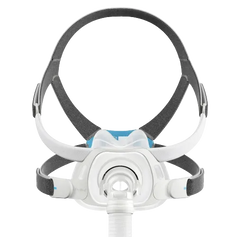
Use the padded CPAP case provided by your manufacturer or a dedicated travel carrying case for superior protection. Bag CPAP components like your mask and tubing separately in clear zip-top bags to keep them clean and make inspection easier.
Keep extra supplies like cushions or spare filters in accessible side pockets, and consider adding a "Medical Device FRAGILE" luggage tag to your CPAP bag.
Navigating Airport Security with Your CPAP Machine
Navigating through Transportation Security Administration (TSA) with a CPAP machine is easier than it might seem. When you reach the checkpoint, you’ll handle your CPAP much like screening a laptop.
You will need to remove the CPAP machine from its travel case and place it in a separate bin for X-ray screening through the X-ray machine. TSA agents may need to perform an explosive-trace swab on the exterior of the CPAP machine, which is a quick and routine procedure.
For hygiene, it is a great idea to carry disinfecting wipes to quickly clean your CPAP machine after it has been handled by TSA agents. Knowing the TSA's official policy on CPAP medical devices can provide added peace of mind during the security check.
|
Pro Tip: To speed up security screening, place your CPAP machine in a clear plastic bag at the top of your carry-on bag for easy access. This allows for quick removal and placement in a separate bin for the X-ray screening, just like a laptop. |
Using Your CPAP In-Flight: Accessible Outlets & Battery Power
A window seat is often the best choice for in-flight CPAP use, as it gives you a wall to lean against and keeps you out of the way of aisle traffic. When booking, check airline and seat-review websites to identify seats with accessible outlets. If your airline allows it, a low-profile extension cord can be helpful, but always confirm this is permitted before boarding your flight.
For long flights, patients with sleep apnea need a reliable CPAP battery. Calculate your power needs for the flight time and bring one of your battery packs with at least 1.5 times the capacity required. A fully charged, FAA-compliant CPAP battery is your only guarantee for uninterrupted therapy and quality sleep during your air travel.
Using a traditional CPAP humidifier drains battery power significantly faster. To conserve energy, travel with the humidifier chamber empty.
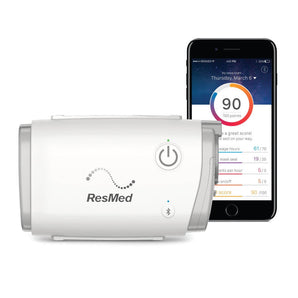
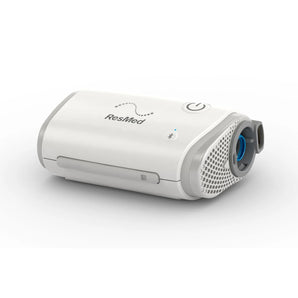
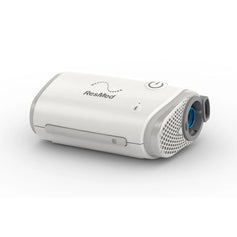
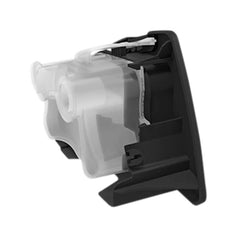
Some CPAP devices, including compact travel CPAPs like the ResMed AirMini, offer waterless humidification or mini-chambers to simplify this process for those who need CPAP.

Briefly inform the cabin crew that you will be using a CPAP medical device. Before sleeping, mute any mask-off or leak alerts on your CPAP machine or check the user manual if you're unsure how.
|
Pro Tip: To prevent your CPAP tubing from getting away, a little trick that works surprisingly well is a basic binder clip. Just attach the tubing to your shirt or even the seat pocket in front of you. It will keep the tubing tidy so you can relax without constantly adjusting it. |
Understanding Airline Policies for CPAP Devices & International Travel
When traveling with a CPAP internationally, airline policies for CPAP machines can vary, and being prepared for your destination's power standards is key. Most modern CPAP machines feature dual voltage capabilities.
A quick check of the airline's website beforehand can prevent surprises upon boarding, as most airlines require advance notice for in-flight CPAP use. Popular Airline CPAP Policies (Check for Updates).
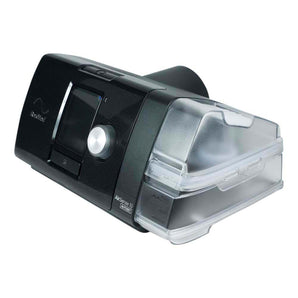
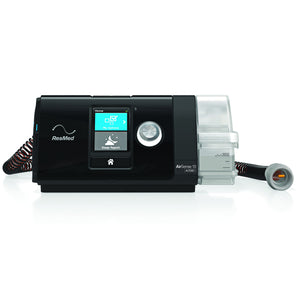
When you arrive, you will need the right power adapter. Most modern CPAP machines, like the ResMed AirSense 11 or ResMed AirCurve 11, have a power brick that can handle 110-240V (dual voltage).
However, since plug shapes vary by region, ensuring plug compatibility is essential for your travel preparation. This means you will not need a voltage converter.
Keep your medical letter and CPAP medical documents handy for customs. If you also travel with a Portable Oxygen Concentrator (POC), the procedures for that medical device are similar, but check with us for specific guidance on oxygen concentrators.

Must-Have CPAP Supplies & Travel Accessories
A few smart add-ons can simplify using your CPAP machine on long-haul international flights and during your stay. Having the right CPAP gear can make all the difference in comfort and convenience for your CPAP therapy.
Here are the essential travel accessories you should pack for a comfortable and uninterrupted therapy experience:
-
FAA-Compliant CPAP Travel and Backup Batteries: A reliable power source like one of these battery packs or portable power stations is non-negotiable for overnight flights.
-
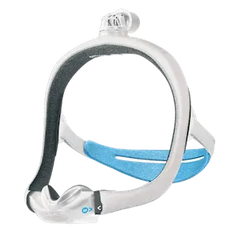
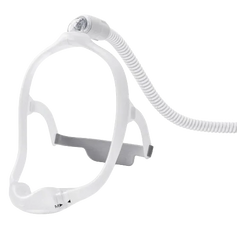
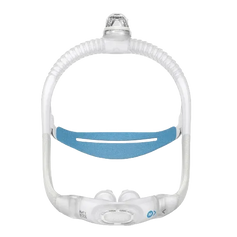
A Comfortable Travel Mask: Consider a low-profile design like the RespShop’s ResMed AirFit P30i mask for easier sleeping in an upright position with your CPAP machine.
-
Universal Plug Adapters: A single adapter with multiple plug types is a traveler’s best friend. Note this is a plug adapter, not a power converter that changes the voltage.
-
Sanitizing Wipes & Mini Hose Brush: Keep your CPAP equipment clean and hygienic in hotel rooms and on the plane.
-
Breathable Mask Liners: Enhance comfort and reduce skin irritation during long, 8-hour+ CPAP therapy sessions on a CPAP mask.
Travel Confidently with Your CPAP
When you know your rights, preparing your CPAP, and packing with little intention, traveling the world becomes so much easier. Instead of stressing about your machine, you can manage away from stress to focusing on the trip itself. These little tips really can turn flying with a CPAP from something you dread into just another part of the adventure.
Still have questions or need some extra reassurance? You’re not on your own. Our team is always happy to help. Explore our Travel CPAP Machines whenever you’re ready or reach out and we will be ready to help